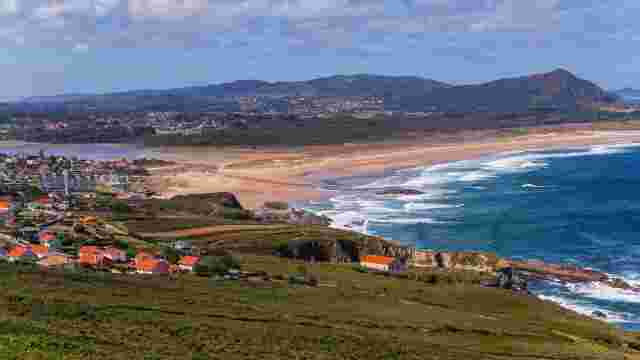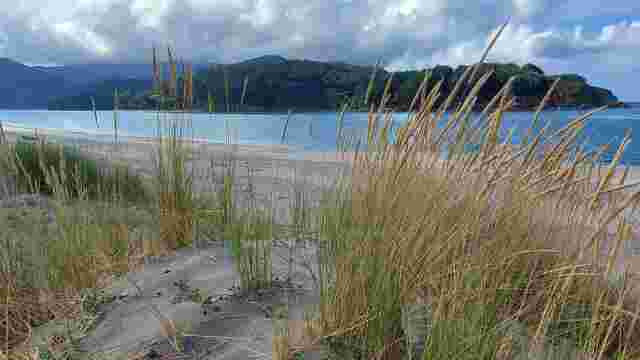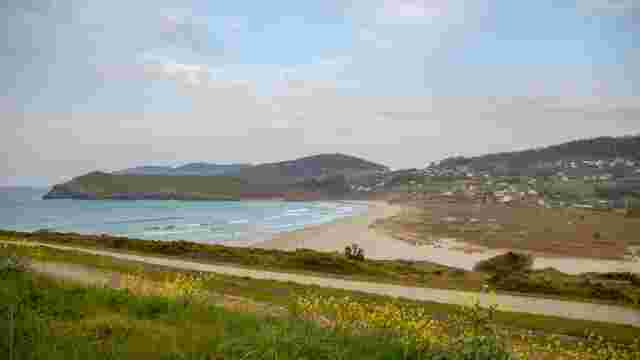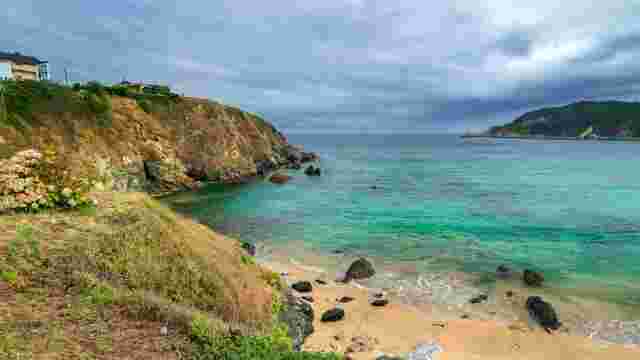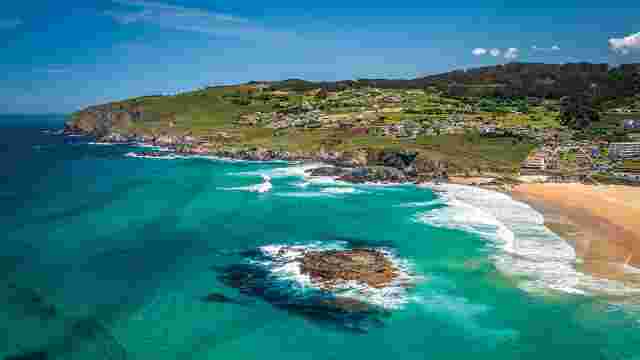
Fornos beach
The folds that trace the collapse of Gondwana
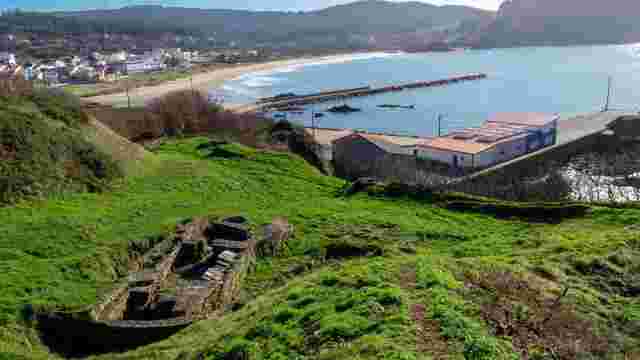
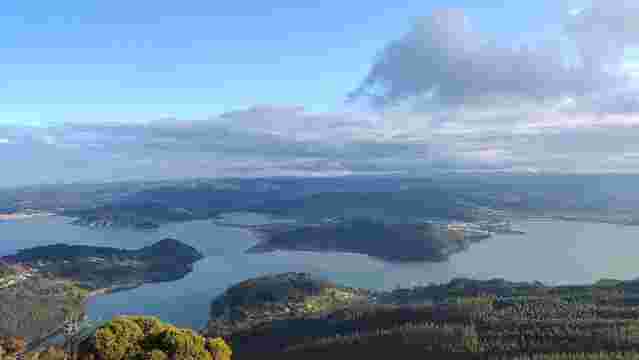
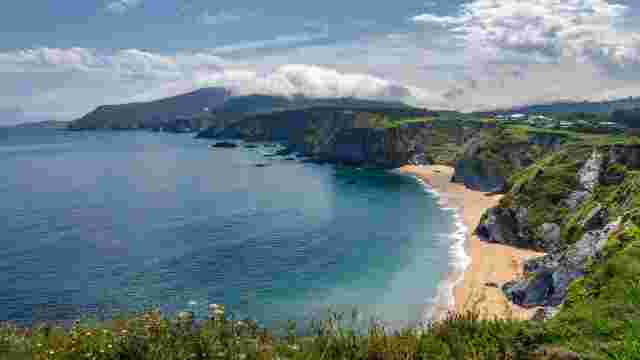
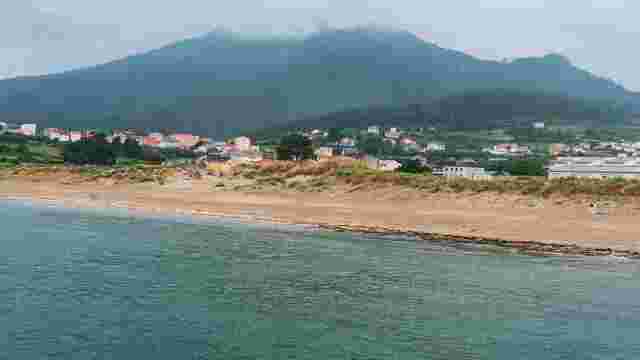
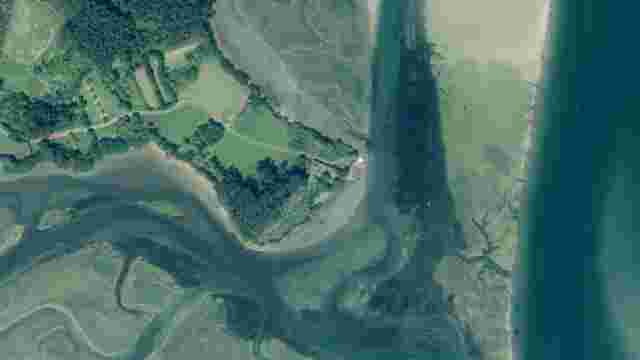
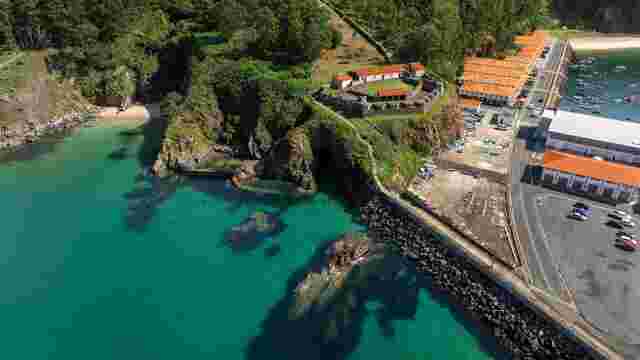
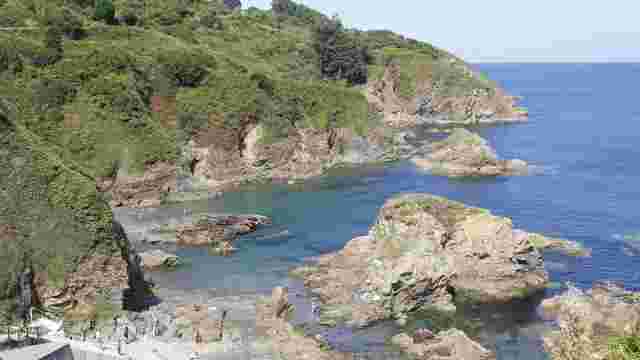
The gneisses on Fornos beach, located on the left bank of the mouth to the Cariño-Ortigueira estuary, feature large folds that seem to twist like ribbons of rock. These rocks belong to the unit found at the highest structural position in the entire Cabo Ortegal Complex, known as the ‘Cariño gneisses’, and form part of the core of a large recumbent fold, the recumbent synform of the Serra da Capelada.
The precursors of these gneisses (protolithes) were Cambrian greywacke sandstones, which were deposited in a sedimentary basin on the periphery of Gondwana. The original sedimentary rocks were buried and metamorphosed into gneisses during the Variscan continental collision, and were subsequently uplifted. These large folds reflect the most recent Variscan history of this formation, as they were generated in advanced stages of its exhumation.